RECOVERY & REPAIR
BPC-157
Compounded BPC-157 sourced through a licensed US pharmacy and placed inside clinician review, not a research-vendor checkout.
From $179/mo
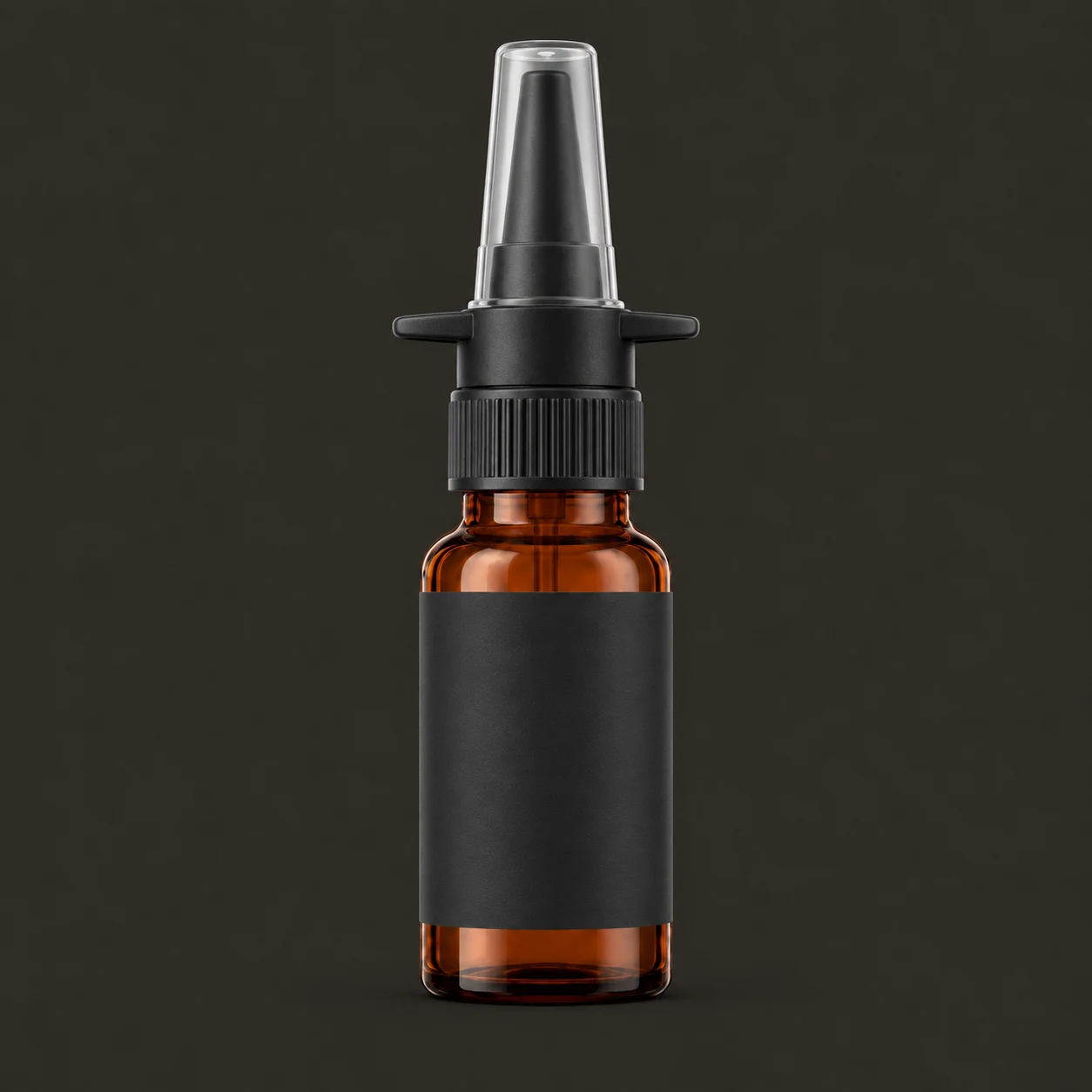
Compounded NAD+ nasal spray for patients seeking a no-needle route with absorption and use questions addressed honestly.
$139/month
Standard plan price$139 monthly.
150 mg/mL monthly plan: $139 billed monthly · 1 bottle total plan quantity. 150 mg/mL quarterly plan: $417 every 3 months · 3 bottles total plan quantity. 300 mg/mL monthly plan: $139 billed monthly · 15 mL total plan quantity. 300 mg/mL quarterly plan: $179 every 3 months · 30 mL total plan quantity. These are standard recurring prices. The concentration, total quantity and billing interval differ; compare the exact option before choosing a plan.
Compounded NAD+ nasal spray for patients seeking a no-needle route with absorption and use questions addressed honestly.
Read the evidence and its limitationsA licensed clinician reviews your health history and medications and determines whether treatment is appropriate for you.
Read the full Important Safety InformationComplete the online assessment with your health history, current medications and treatment goals. A licensed clinician reviews the information and decides whether to prescribe. If prescribed, a licensed pharmacy prepares and ships your medication.
See how care worksNAD+ is a coenzyme present throughout human cells and involved in the chemistry of energy metabolism and cellular repair systems. That biology is the same reason people become interested in both injectable and nasal NAD+.
The route is the point.
The compounded nasal spray is delivered across the nasal lining rather than by subcutaneous injection. For someone who is interested in NAD+ but knows that needles will make the routine harder to sustain, that practical difference can be meaningful.
The route does not establish equivalence. A nasal spray and an injection are different formulations and delivery routes. The spray avoids the needle and delivers NAD+ intranasally, but evidence has not established that it reproduces injectable exposure or outcomes.
The spray provides a no-needle NAD+ route with clinician-set use and follow-up. Absorption and format differences remain part of the prescribing decision.
Read the evidenceThe biology interests you, but an injection routine does not. You want to know whether a nasal prescription is a medically reasonable way to explore the molecule without building needles into the day.
Cellular-energy and NAD+-dependent enzyme biology are what caught your attention. You want those mechanisms discussed seriously without promises about how the spray will make you feel.
You know a treatment only fits if the routine fits too. A nasal spray is a simpler practical ask, provided your clinician determines the formulation belongs in the plan.
Compounded NAD+ nasal spray is not an FDA-approved drug product. A licensed provider sets candidacy and cadence from your full intake, and results vary.
Your intake screens for all contraindications. Every candidate is evaluated by a licensed clinician before any prescription is issued. No prescription is issued without clearance.
Compounded by a licensed 503A pharmacy. Prescribed by a licensed provider after clinical review.
Compare billing options and longer-term costs
You'll begin an online assessment for NAD+ Nasal Spray.
Starting an assessment doesn't guarantee a prescription. How care works
Prescription issued subject to provider judgment. Results vary. Not a guarantee of outcomes.
Your subscription renews at your selected billing interval. Cancel through your member dashboard before the next billing date to stop future charges. Cancellation does not refund the current billing period. See cancellation and refund terms.
Message your provider about dosing, side effects, your response or changes in your health.
Open patient portalNew to AnthologyRX? Ask our team about getting started.
Licensed clinicians affiliated with Arora Health & Aesthetics, LLC review your health history, medications and goals, then discuss whether NAD+ Nasal Spray or another approach fits your needs.
Medical information on this page reviewed by Dr. Dylan Russell, MD, Chief Health Officer on . Your prescribing clinician provides your individual care.
Verify Dr. Russell's medical licensePrepared to your prescription by a licensed compounding pharmacy. Our partners have verified quality programs covering identity, potency, independent testing and batch documentation.
Compounded preparations are not FDA-approved. Pharmacy quality controls and your clinician's evaluation of treatment evidence each have a role in your care.
Availability depends on your prescription and location. For pharmacy questions, contact our team.
Message your provider through the patient portal about dosing, side effects, your response or changes in your health. Contact AnthologyRX support for billing, shipment or portal-access help.
The first clinical pharmacokinetic study of an NAD+ precursor was a randomized, double-blind, three-arm crossover trial in 12 healthy adults aged 30 to 55, in which single oral doses of nicotinamide riboside at 100, 300 and 1,000 mg produced dose-dependent increases in the blood NAD+ metabolome measured over 24 hours. That is a pharmacokinetic measurement, not a health outcome.1
In a two-period, six-week randomized, double-blind, placebo-controlled crossover trial, 30 healthy adults aged 55 to 79 were randomized and 24 completed a regimen of 1,000 mg per day of oral nicotinamide riboside, which raised NAD+ in peripheral blood mononuclear cells by approximately 60 percent relative to placebo. The endpoint met was a change in a blood-cell biomarker, not a change in health.2
A randomized, double-blind, placebo-controlled crossover trial gave 1 gram per day of oral nicotinamide riboside to 12 aged men for 21 days and found the skeletal muscle NAD+ metabolome elevated while muscle mitochondrial bioenergetics were unchanged, a direct demonstration that raising NAD+ metabolites in a tissue and improving the function of that tissue are separate results.3
In a 12-week randomized, double-blind, placebo-controlled parallel-group trial, 40 sedentary men with obesity aged 40 to 70 took 2,000 mg per day of oral nicotinamide riboside, and insulin sensitivity measured by hyperinsulinemic-euglycemic clamp, endogenous glucose production, resting energy expenditure, lipolysis and body composition were all unimproved compared with placebo.4
A 10-week randomized, double-blind, placebo-controlled trial of 250 mg per day of oral nicotinamide mononucleotide in 25 randomized postmenopausal women with prediabetes who were overweight or obese reported increased insulin-stimulated glucose disposal by hyperinsulinemic-euglycemic clamp and increased skeletal muscle insulin signaling, a single small mechanistic finding rather than an established clinical benefit.5
A systematic review of intervention studies published between January 2010 and October 2025 identified 33 human intervention studies, 28 of them randomized, and concluded that oral nicotinamide riboside and nicotinamide mononucleotide consistently achieved biochemical target engagement in circulating or cellular NAD-related metabolites while effects on functional, metabolic, vascular and other healthspan-relevant outcomes were heterogeneous and often null.6
A search of the published literature and the ClinicalTrials.gov registry identified no published randomized controlled trial of intranasal NAD+ in humans for any indication. The intranasal NAD+ literature that exists is preclinical: reduced infarct size in a rat model of transient focal ischemia, reduced hippocampal neuron death in a rat model of traumatic brain injury, and restored olfactory function in mice alongside work in cultured human olfactory stem cells.78910
One registered study administering intranasal NAD+ was located, an unmasked randomized pilot with an estimated enrollment of 30 in which a 30 mg per day nasal spray is given together with three or six other agents, a design that cannot isolate any effect attributable to the nasal spray, and for which no results had been posted as of August 2026.11
No approved drug product contains NAD+ as an active ingredient. A query of the FDA approved-drug database returned no approved application for nicotinamide adenine dinucleotide by any route, so no approved indication, dose or labeling exists for longevity, cognition, energy or recovery.12
A compounded NAD+ nasal spray is not an FDA-approved drug product, and the FDA states that it does not verify the safety, effectiveness or quality of compounded drugs before they are marketed.13
The precursor trials described above do not transfer to this preparation. Nicotinamide riboside and nicotinamide mononucleotide are different molecules from NAD+, they were given by mouth rather than across the nasal mucosa, and they were given at hundreds to thousands of milligrams per day.12345
No human study has measured whether intranasal NAD+ is absorbed, whether it raises NAD+ in blood or in any tissue, or how long any such change lasts.7
The honest starting point is that what is documented for NAD+ comes from intravenous infusion, and with a nasal spray local effects are the ones to watch for. Your provider screens for active sinus infection, recent nasal surgery, nasal polyps, pregnancy and uncontrolled cardiovascular conditions before prescribing, and reviews your medications alongside them. The thinness of the evidence for this route is the reason it sits with a clinician rather than in a shopping cart.
Compounded BPC-157 sourced through a licensed US pharmacy and placed inside clinician review, not a research-vendor checkout.
A lower-dose compounded semaglutide and vitamin B12 injection, with individual prescribing, pharmacy fulfillment and follow-up.
A lower-dose compounded tirzepatide and vitamin B12 injection, with individual prescribing, pharmacy fulfillment and follow-up.
You are in
CODEEnter it at checkout for 20% off your first order. Keep it handy.
Find your treatmentBrowse all treatments